
Composite vs. Wood Decking in Nashville: Which Wins
An honest, no-thumb-on-the-scale comparison of composite and wood decking for Nashville’s hot, humid climate, cost, upkeep, lifespan, and looks.
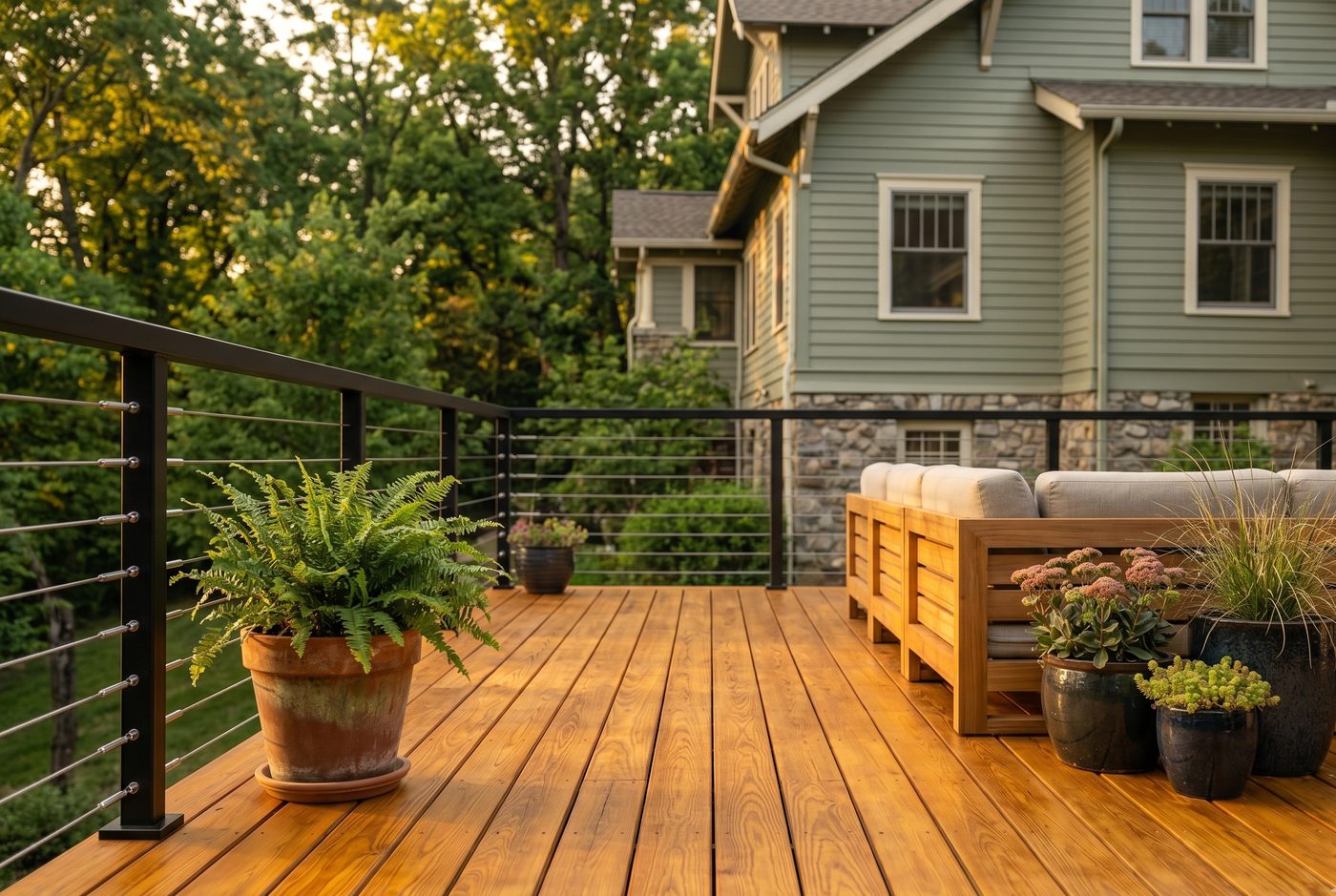
It's the decision that shapes your whole deck, the look, the upkeep, and a big chunk of the budget. In Nashville's hot, humid summers and damp winters, the material you pick really matters. Here's a straight comparison of composite and wood decking, with no thumb on the scale.
The 30-second version
Wood costs less today and looks natural, but it asks for regular sealing and slowly loses the fight with Tennessee weather. Composite costs more up front but shrugs off rot, splinters, and fading, and needs little more than a wash. For most Nashville backyards, composite wins on total cost of ownership, but wood still has its place.
| Wood | Composite | |
|---|---|---|
| Upfront cost | Lower | Higher (20–40%) |
| Yearly upkeep | Sand, seal, stain | Wash with soap & water |
| Lifespan | 10–15 yrs | 25–30+ yrs |
| Heat underfoot | Cooler | Warmer in full sun |
| Splinters / rot | Yes, over time | No |
| Warranty | None on the wood | Decades (e.g. Trex) |
Upfront cost
Pressure-treated pine is the cheapest way to get a deck. Cedar costs more and looks richer. Composite typically runs 20–40% more than pressure-treated for the boards. If the lowest possible sticker price is the goal, wood wins this round, see the full numbers in How Much Does a Deck Cost in Nashville?
Maintenance, where wood gets expensive
This is the part people underestimate. A wood deck in Middle Tennessee wants cleaning and re-sealing every one to three years to fight moisture, mildew, and UV. That's either weekends of your time or a few hundred dollars a year paid out. Over a 15-year life, that upkeep can quietly add up to more than the price gap you "saved" by choosing wood. Composite asks for a wash a couple of times a year and that's it.
How each handles Nashville weather
Our summers are hot and humid and our winters are damp, tough conditions for wood. Untreated or poorly maintained wood cups, checks, and grows mildew. Quality composite is engineered with a protective cap that resists moisture, mold, and fading, so it looks the same in year ten as year one. The one honest knock on composite: dark boards get hot in full afternoon sun. We help you pick a lighter shade or plan shade (a pergola) for sunny exposures.
Looks
Wood has a warmth and grain some people love, and it can be stained any color, though it'll weather to gray without upkeep. Today's composite comes in convincing wood-grain tones, multi-tonal streaking, and clean modern colors, and it holds that look. If you want a contemporary, low-fuss backyard, composite usually nails it; if you want true natural timber and don't mind the maintenance, wood delivers.
Resale and value
A deck is one of the better-returning outdoor projects in a home sale, and buyers increasingly see low-maintenance composite as a plus, no one tours a house hoping for a deck they'll have to re-stain every spring. A well-built deck of either material adds usable living space, which is what really moves a buyer.
So which should you choose?
- Choose composite if you're staying put, you hate yard chores, or you want a modern look that stays put for decades. It's our default recommendation for most Nashville backyards.
- Choose wood if you want the lowest upfront price, you love natural timber, or it's a shorter-term home and you don't mind the upkeep.
There's no wrong answer, only the right one for your budget, your timeline, and how you want to spend your weekends. We'll walk you through samples of both at your free consult.
Not sure which is right for you?
We’ll bring samples of both and talk through cost, upkeep, and looks at your free consult.
Call 615·863·1836General guidance for the Nashville / Middle Tennessee market as of June 2026. Material performance varies with product grade, color, exposure, and maintenance. We confirm the right choice for your deck at consult.